Azure API Management (APIM) Capability
Overview
Azure API Management (APIM) provides a centralized platform for publishing, securing, monitoring, and managing APIs across an organization. As APIs have become the standard mechanism for connecting applications, services, and data, effective API management has become critical to supporting digital transformation initiatives.
The APIM capability enables organizations to standardize API governance, improve security, streamline deployments, and provide controlled access to APIs through the Azure API Management Gateway and Developer Portal. By leveraging CI/CD practices and Role-Based Access Control (RBAC), organizations can efficiently manage APIs across multiple environments while reducing operational overhead.
Why API Management CI/CD
APIs are the foundation of modern application integration and digital ecosystems. As organizations expand their API footprint, managing API deployments manually becomes increasingly complex and error-prone.
Implementing Continuous Integration (CI) and Continuous Deployment (CI/CD) for Azure API Management provides the following advantages:
- Automated deployment of API configurations and policies.
- Faster delivery of API enhancements and bug fixes.
- Reduced risk of deployment errors caused by manual processes.
- Consistent deployment across Development, Testing, and Production environments.
- Early detection of configuration and integration issues.
- Improved governance and traceability of API changes.
By treating APIM configurations as code, organizations can adopt Infrastructure-as-Code (IaC) practices and integrate API deployments directly into existing DevOps pipelines.
Features Offered by APIM
The APIM capability provides centralized governance of APIs across the enterprise.
Key Features
- API Publishing and Version Management
- API Security and Authentication
- API Monitoring and Analytics
- Developer Portal Management
- Policy Management
- Subscription and Product Management
- Environment Promotion through CI/CD
- Role-Based Access Control (RBAC)
Benefits
- Centralized governance for all APIs.
- Consistent security and compliance standards.
- Improved developer experience.
- Reduced operational overhead.
- Faster API onboarding and deployment.
- Better visibility into API usage and performance.
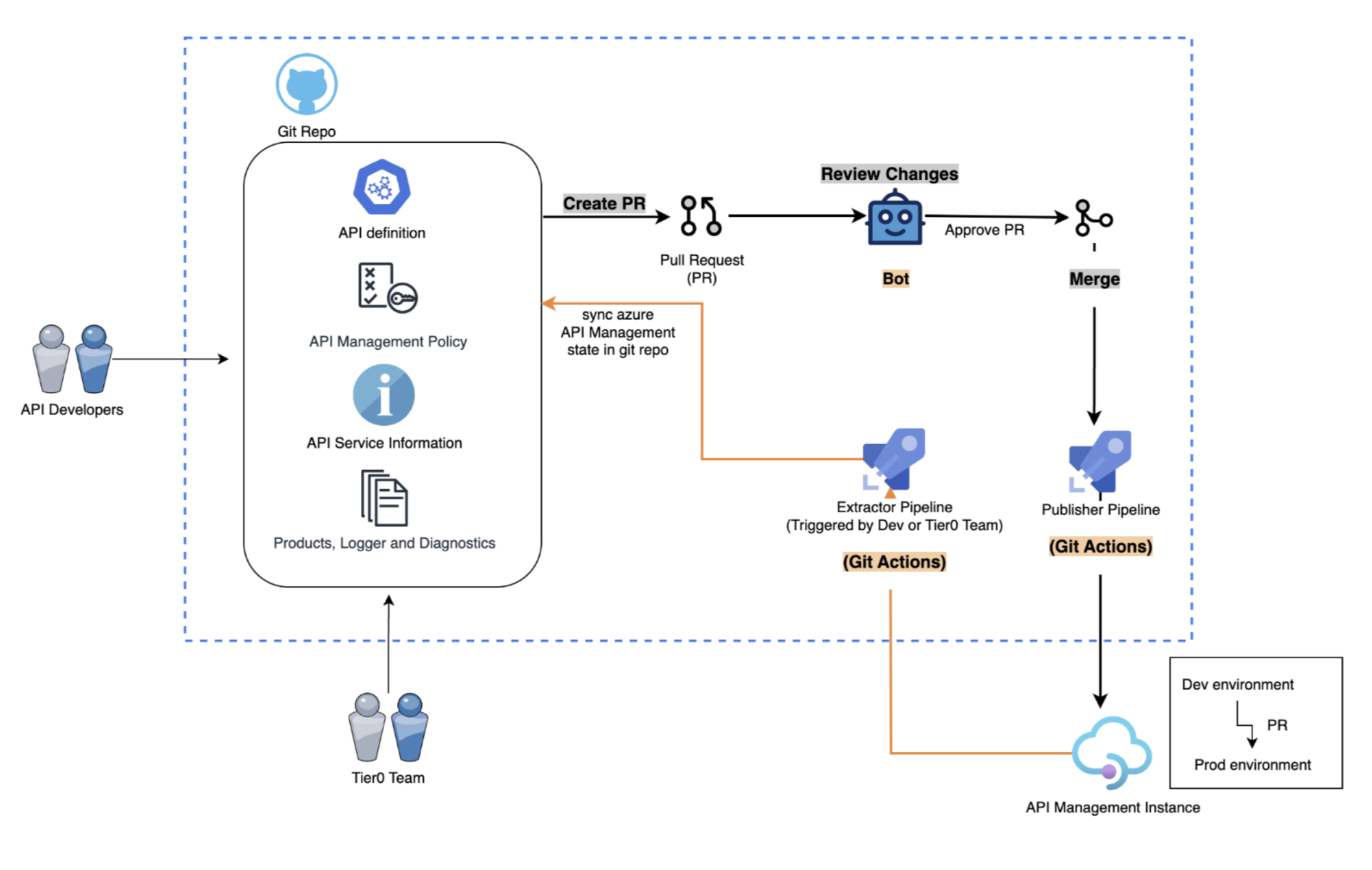
Design for CI/CD with API Management
The following architecture demonstrates the recommended CI/CD workflow for Azure API Management deployments across environments.
Azure APIM Developer Portal RBAC
Overview
Role-Based Access Control (RBAC) in Azure API Management (APIM) helps control who can access and manage APIs, products, and resources. By assigning permissions through roles and groups, organizations can ensure that only authorized users have the appropriate level of access.
Benefits of RBAC
- Granular Access Control: Manage permissions at the API, product, or group level.
- Enhanced Security: Restrict access to sensitive APIs to authorized users only.
- Scalability: Easily manage access as the number of users and APIs grows.
- Flexibility: Customize access controls to suit business and organizational requirements.
Key Components
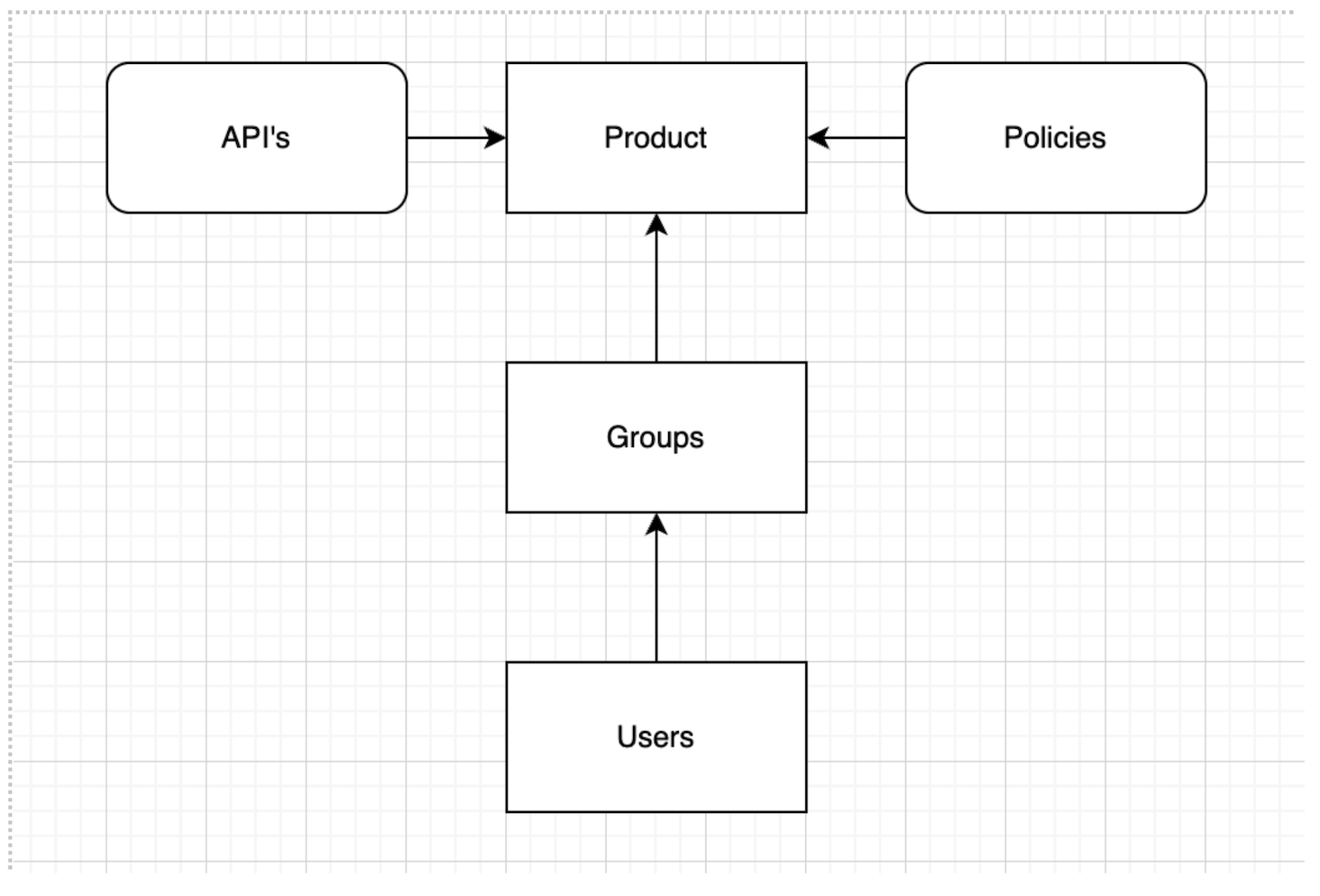
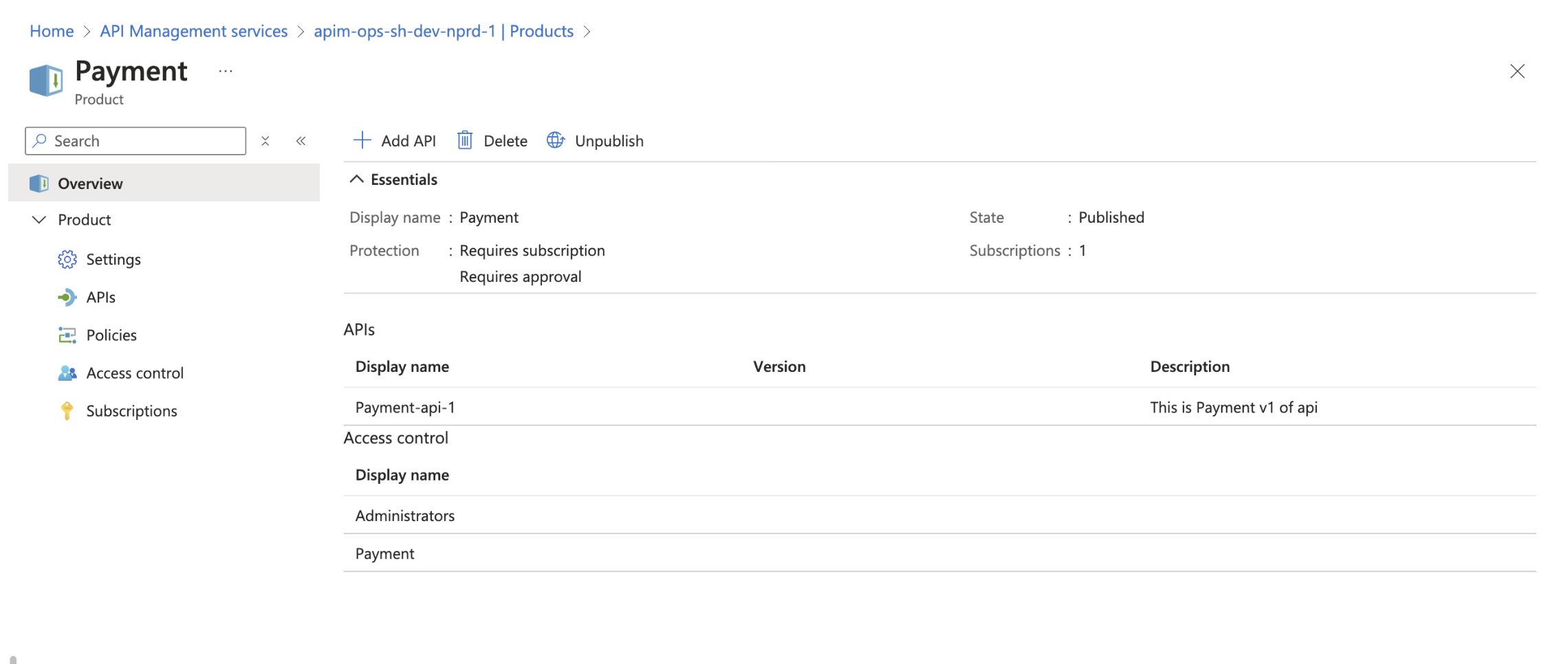
1. Products
- Products are collections of related APIs.
- Access is managed at the product level.
- Users must subscribe to a product to use its APIs.
- Example: The Payment product contains payment-api-1.
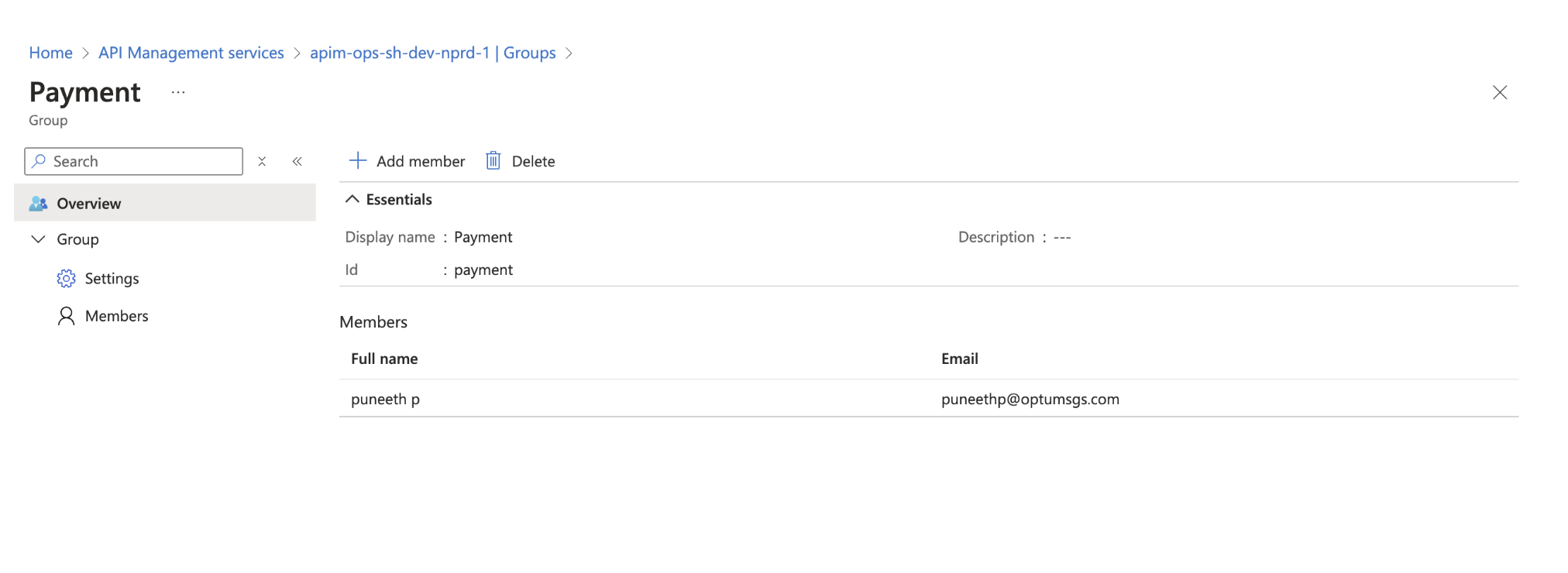
2. Groups
- Groups are used to organize users based on roles or access needs.
- Permissions are assigned to groups instead of individual users.
- Azure APIM provides default groups (Administrators, Developers, Guests) and supports custom groups.
- Example: A custom Payment group is created for users who need access to Payment APIs.
3. Users
- Users are individuals who consume or manage APIs.
- A user can belong to one or more groups.
- Access to APIs is inherited through group memberships and product subscriptions.
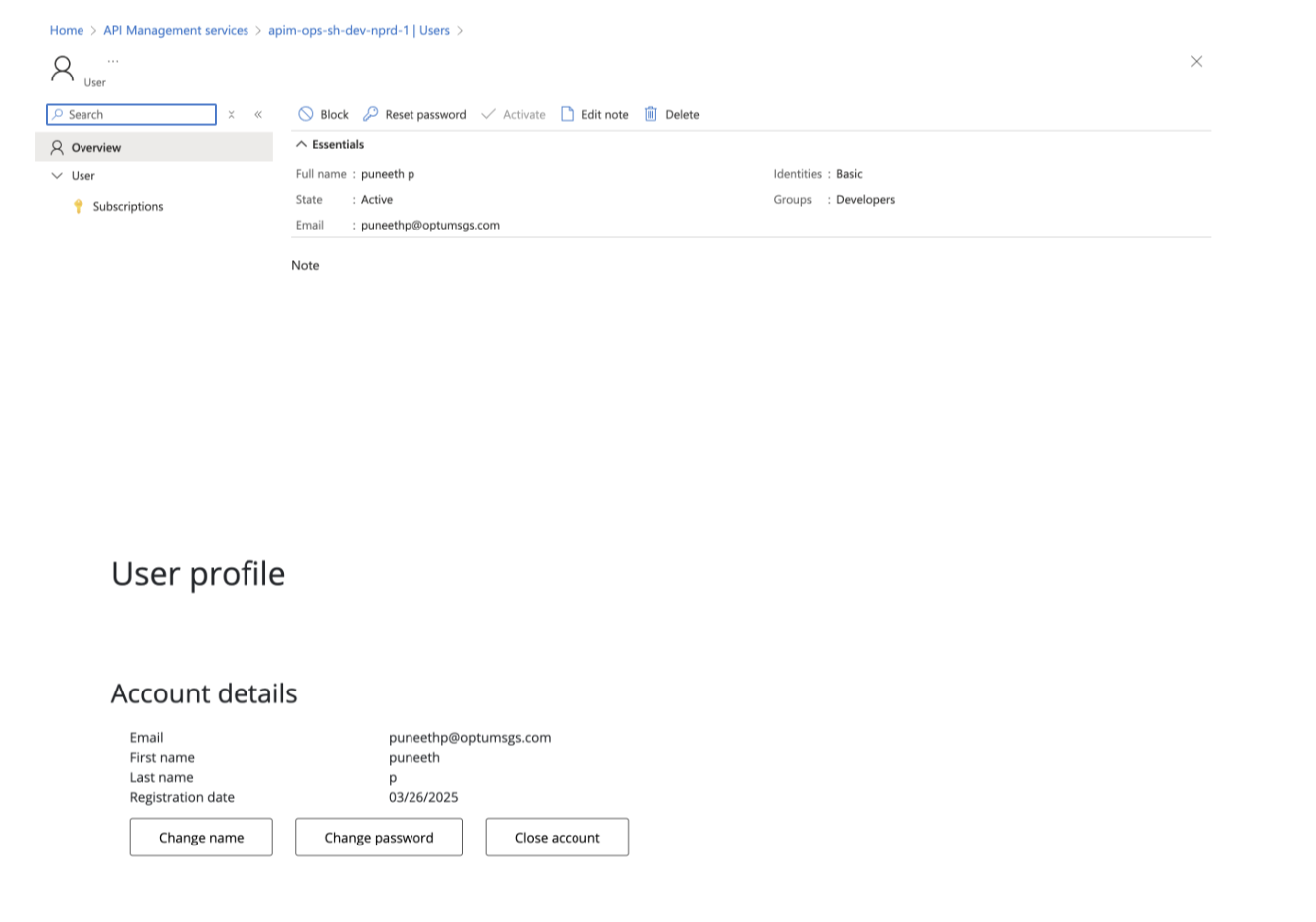
- Example: Puneeth P is a member of the Payment group and can access Payment APIs.
Access Control (AC) Workflow
The following workflow illustrates how users, groups, products, and subscriptions work together to provide controlled access to APIs within Azure API Management.